


Automatic door installation standards you need to know
Automatic doors are increasingly used in many types of buildings such as offices, shopping centers, restaurants, and hospitals thanks to their convenience and modern operation. Join Thuy Linh Long to explore the essential technical standards for installing automatic doors to ensure safe, stable, and long-lasting performance.
1. Overview of automatic door technical standards
Technical standards for automatic doors are developed to ensure safe and stable operation while meeting the needs of different types of buildings, so understanding these basic standards helps optimize installation efficiency and minimize potential issues during use.
1.1 Safety standards during operation
Safety is the top priority for automatic door systems, so doors must be equipped with motion and obstacle detection sensors to ensure they can stop or reverse in time when someone passes through, thereby minimizing collision risks and ensuring smooth and safe access for users.
1.2 Durability and lifespan standards
A standard-compliant automatic door system must be designed with high-quality components such as motors, sliding rails, and transmission systems that can operate reliably over long periods while withstanding continuous opening and closing in high-traffic areas like shopping malls or office buildings.
1.3 Opening and closing performance standards
The opening and closing speed of automatic doors should be adjustable to suit each building’s characteristics, with control systems allowing settings for opening speed, hold-open time, and closing speed to ensure flexible operation and improved usability.
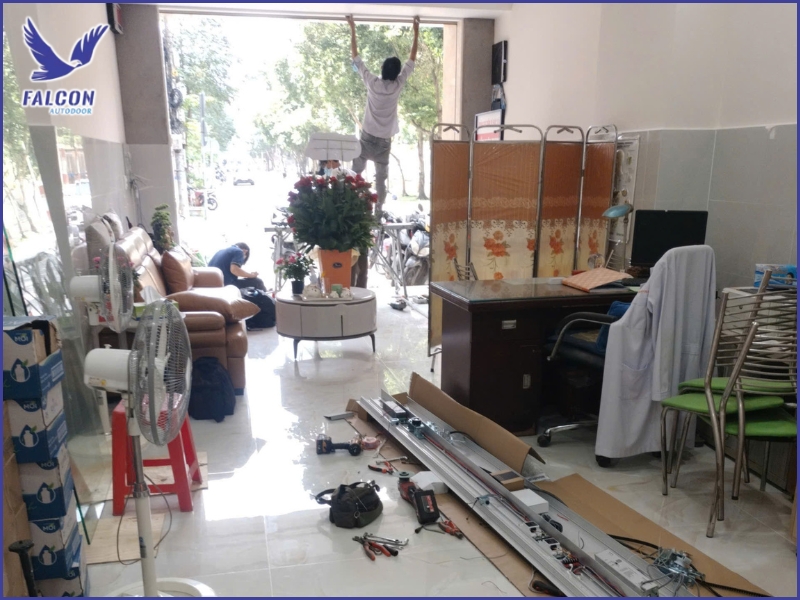
2. Structural and equipment standards for automatic doors
To ensure stable and efficient operation, components such as motors, sliding rails, sensors, and controllers must meet specific technical standards, ensuring synchronization between all parts and enabling smooth, safe, and durable performance under various environmental conditions.
2.1 Automatic door motor and load capacity
The motor is the most critical component of an automatic door system and must meet power and load capacity standards suitable for the door weight and usage frequency, ensuring smooth operation, stability, and long-term performance without overload.
2.2 Sliding rails and transmission system
Sliding rails and transmission systems must be precisely engineered to ensure smooth door movement throughout the entire operation cycle, while durable materials for rails and rollers help reduce friction, minimize noise, and maintain long-term stability.
2.3 Motion and obstacle detection sensors
Sensors enable automatic doors to detect people or objects near the entrance, so they must have high sensitivity and accuracy to ensure timely door opening and effective obstacle detection, preventing collisions and enhancing safety during use.
2.4 Central control system of automatic doors
The central controller manages all operations of the automatic door system, allowing configuration of parameters such as opening speed, hold-open time, and closing force to ensure flexible operation and synchronization between motors, sensors, and other components.
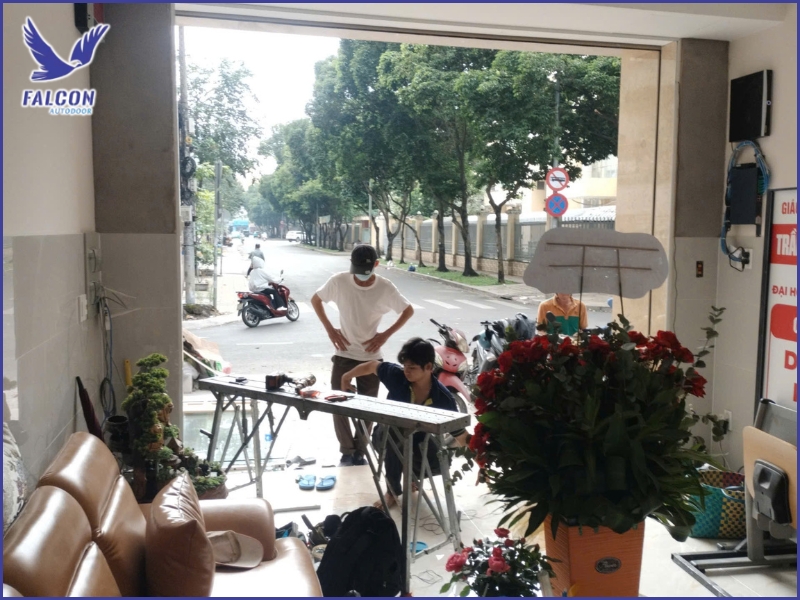
3. Technical standards during installation
The installation process must follow strict technical standards to ensure stable, safe, and efficient operation, from preparing the entrance structure and installing components to testing and commissioning according to system requirements.
3.1 Requirements for door frame size and structure
Before installation, entrance dimensions and door frame structures must be accurately measured and calculated to ensure load-bearing capacity and compatibility with door weight, helping maintain stability and preventing misalignment or vibration during operation.
3.2 Precision in installing rails and motors
Sliding rails and motors must be installed in the correct position with perfect alignment to ensure smooth door movement, while precise calibration reduces friction, minimizes noise, and extends the lifespan of the entire system.
3.3 Electrical system and power supply
The power supply for automatic doors must comply with technical standards to ensure stable and safe operation, with properly arranged wiring, power units, and protective devices to minimize risks such as short circuits or operational interruptions.
3.4 Balance checking and test operation
After installation, the system must be thoroughly checked for door balance, opening and closing performance, and sensor responsiveness to ensure all components operate synchronously and meet real-world usage requirements.
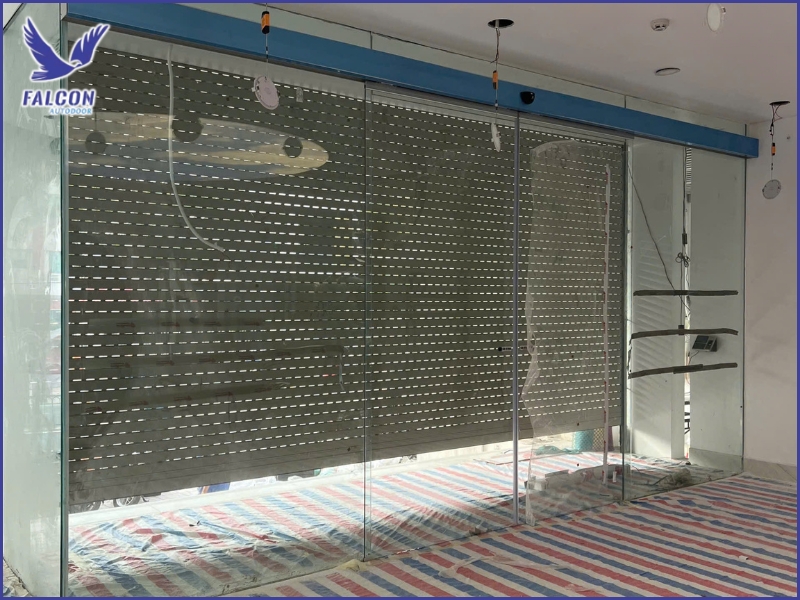
4. Important notes for stable operation
After installation, proper use and maintenance play a key role in maintaining performance, as regular inspection and servicing according to technical recommendations help ensure smooth operation, reduce failures, and extend system lifespan.
4.1 Choosing equipment suitable for usage frequency
Each building has different usage levels, so selecting motors and configurations that match actual operating frequency is essential, as unsuitable equipment can lead to rapid wear and reduced performance.
4.2 Regular maintenance and inspection
Automatic doors require periodic maintenance to check components such as motors, rails, sensors, and controllers, helping detect early signs of issues and ensure stable and safe operation.
4.3 Ensuring sensor accuracy
Sensors must be regularly cleaned and inspected to prevent dust or obstructions from reducing sensitivity, ensuring timely operation and maintaining a high level of safety.
4.4 Checking mechanical components over time
Over time, mechanical parts such as rollers, guide rails, and transmission systems may wear out, so timely inspection and adjustment are necessary to maintain balance and ensure smooth, durable operation.
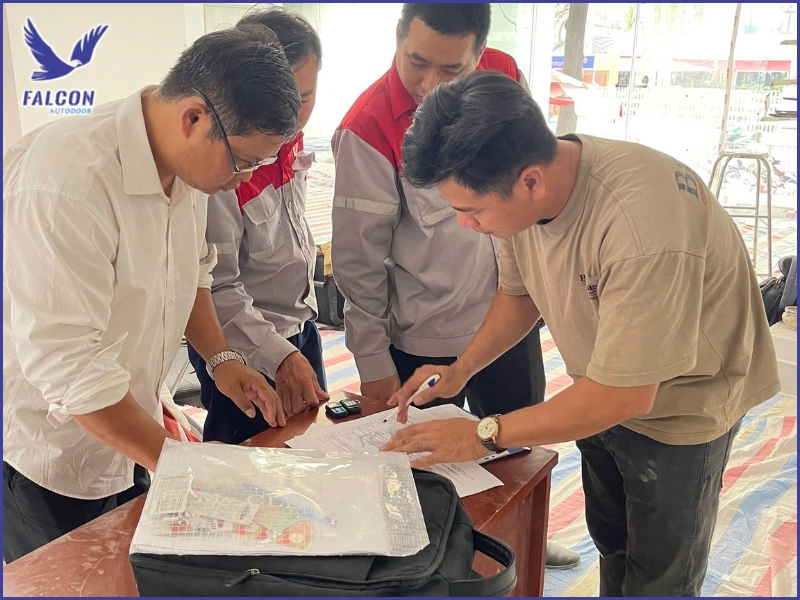
Understanding technical standards for automatic door installation helps ensure safe, stable, and efficient operation. When equipment, structure, installation, and maintenance are properly executed, automatic doors not only operate reliably but also enhance convenience and professionalism for any space.
If you are looking for automatic door installation solutions, choosing systems that meet technical standards is essential for long-term performance. Contact Thuy Linh Long for detailed consultation and professional solutions tailored to your needs, ensuring optimal operation and efficiency.
THUY LINH LONG SERVICES TRADING COMPANY LIMITED
DISTRIBUTOR
Address: 243D Vuon Lai Street, Phu Tho Hoa Ward, Tan Phu District,
Ho Chi Minh City, Vietnam.
Tel: +84 28 22497999
E-mail: cuatudong24h@gmail.com
SUPPLIER
KUM YANG MATERIALS CO.,LTD
Address: 124-60, Myeongdong-ro, Hallim-myeon,
Gimhae-si, Gyeongsangnam-do, 50851, Korea.
Tel: 82-55-345-8380


