


Automatic doors for apartment buildings: Noise reduction and energy saving solution
The automatic door at the lobby of an apartment building is an effective solution that helps reduce noise, minimize cold air loss, and optimize electricity costs for common living areas. The application of modern door systems also enhances convenience, security, and the professional image of the building. Join Thuy Linh Long to explore the most suitable automatic door solution for your apartment building.
1. The role of automatic doors in apartment building operation
Automatic doors are increasingly becoming a standard feature in modern apartment buildings, where hundreds to thousands of residents and visitors pass through every day. This system not only replaces manual opening but also directly contributes to controlling noise, temperature, and security in the lobby area.
1.1 Characteristics of high traffic at apartment lobbies
The apartment lobby is a transitional space between the residential area and the outside environment with very high traffic density at specific time frames. If traditional doors are used, continuous opening and closing can easily lead to overload, rapid deterioration, and unpleasant noise. Automatic doors help ensure smooth and consistent access for all users, from children to the elderly.
1.2 Challenges of noise, heat loss, and security
Buildings located near major roads are often affected by vehicle noise, dust, and strong winds. Manual doors cannot guarantee a fully closed state, causing air conditioning systems to work inefficiently and increasing electricity costs. In addition, controlling strangers entering the lobby becomes more complicated without an appropriate solution.
1.3 Automatic doors - a standard solution for modern apartments
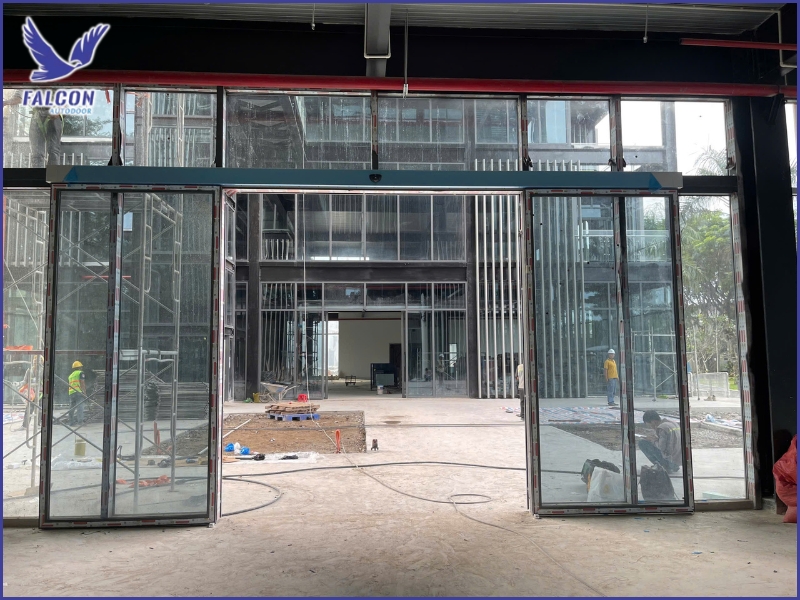
The automatic sliding door system combined with sensors and smart controllers ensures timely opening and closing, minimizing mechanical noise. The door remains closed when not in use, helping maintain stable temperature and creating an effective barrier against the external environment. This is an important foundation for building a civilized and convenient living space for residents.
2. Mechanism that helps automatic doors reduce noise and save electricity
Automatic doors for apartment buildings operate not only based on opening and closing motors but are also designed as a lobby environmental control system. The combination of smart sensors, soundproof materials, and control algorithms helps minimize noise while significantly reducing energy loss.
2.1 Precise operation, minimizing impact and mechanical noise
Unlike manual doors that are often slammed shut by wind or strong force, automatic doors use motors with smooth speed control. Specialized rails and wheels ensure quiet operation without metal friction noise. As a result, the lobby area remains peaceful, especially at night.
2.2 Preventing cold air loss from the lobby
The opening time of automatic doors is calculated just enough for people to pass through and then closes immediately. This mechanism limits cold air from the central air conditioning system escaping outside, helping maintain a stable lobby temperature. Building management can reduce HVAC load and monthly electricity expenses.
2.3 Smart sensors optimizing door opening time
Infrared or radar sensors accurately detect user movement direction to activate the door at the right moment. Parameters such as speed, opening width, and waiting time can be adjusted according to actual traffic. This optimization prevents the door from staying open too long, reducing both noise and energy waste.
2.4 Combination with soundproof glass and sealing gaskets
Many projects use laminated or insulated glass to enhance soundproofing for the lobby. Rubber gaskets and dust brushes at door edges create a tight seal, preventing wind and dust intrusion. This is an important factor for automatic doors to fully promote noise reduction and energy saving efficiency.
3. Comprehensive benefits for residents and management
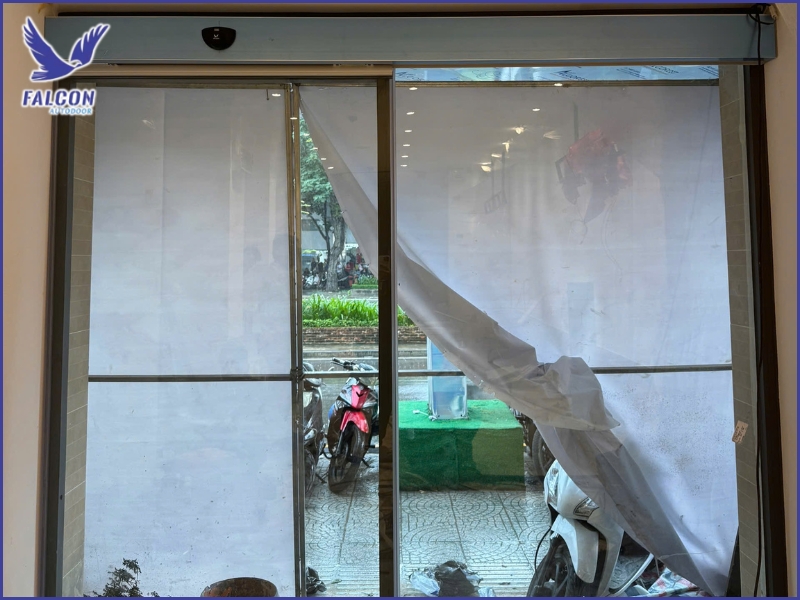
Installing automatic doors in apartment buildings brings practical value to both residents and operating units. Not only solving noise and energy issues, the system also contributes to building a civilized, safe, and more professional living environment.
3.1 Quiet lobby space, improving quality of life
When doors remain closed and operate smoothly, external traffic noise is significantly reduced. Residents waiting for elevators or using the lobby no longer feel disturbed by chaotic sounds. This quiet environment is especially meaningful for the elderly and families with young children.
3.2 Reducing electricity costs for central air conditioning
Automatic doors help prevent continuous opening that causes heat loss. Air conditioning in the lobby operates more stably with lower load, leading to noticeably reduced electricity bills. These savings can be reinvested in other resident utilities.
3.3 Security and traffic control
The door system can integrate with card readers, facial recognition, or security rooms to control strangers. Management can easily regulate peak hours and avoid congestion. This becomes the first protective layer for the entire building.
3.4 Enhancing real estate project image
An apartment building equipped with modern automatic doors always creates a good impression on residents and visitors. A professional lobby image increases property value and investor reputation, becoming a plus point when attracting tenants or buyers.
4. Experience in selecting and installing automatic doors for apartments
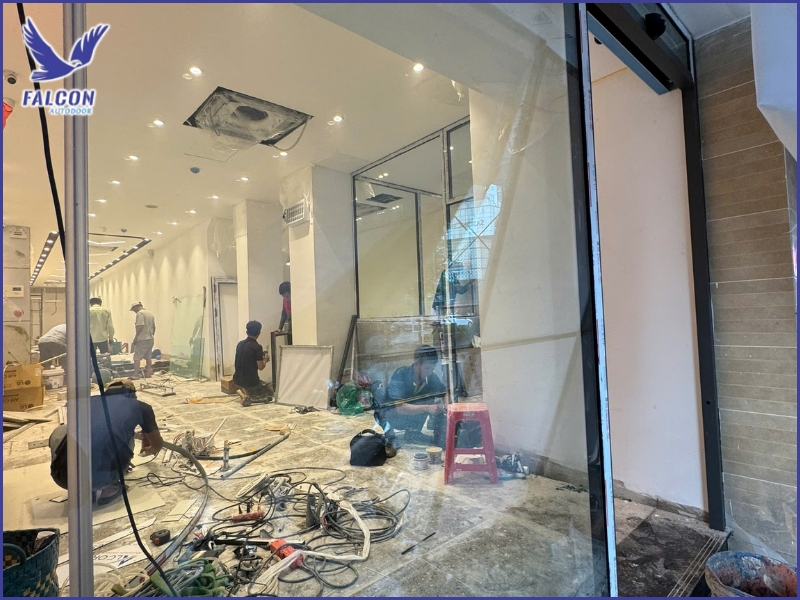
To ensure automatic doors deliver proper noise reduction and energy saving efficiency, solution selection must be based on each building’s characteristics. Installation location, usage frequency, and security integration need to be calculated from the beginning.
4.1 Choosing door types by location
The main lobby should prioritize heavy-duty automatic sliding doors with flexible opening width and speed to meet high traffic. Basement or pool exits can use automatic swing doors with good moisture resistance. Proper classification optimizes costs while ensuring functionality.
4.2 Motor and sensor criteria for high-frequency environments
Apartment buildings operate almost 24/7, so motors must meet industrial standards with high opening cycles and overload protection. Sensors need accurate detection in crowded conditions to avoid unsafe misoperation. This factor determines long-term durability.
4.3 Integration with resident access control
Automatic doors should connect with card systems, intercoms, or cameras to manage access rights. The building can control strangers, record access history, and handle incidents quickly. This turns the door into a key part of the security ecosystem.
4.4 Periodic maintenance for long-term efficiency
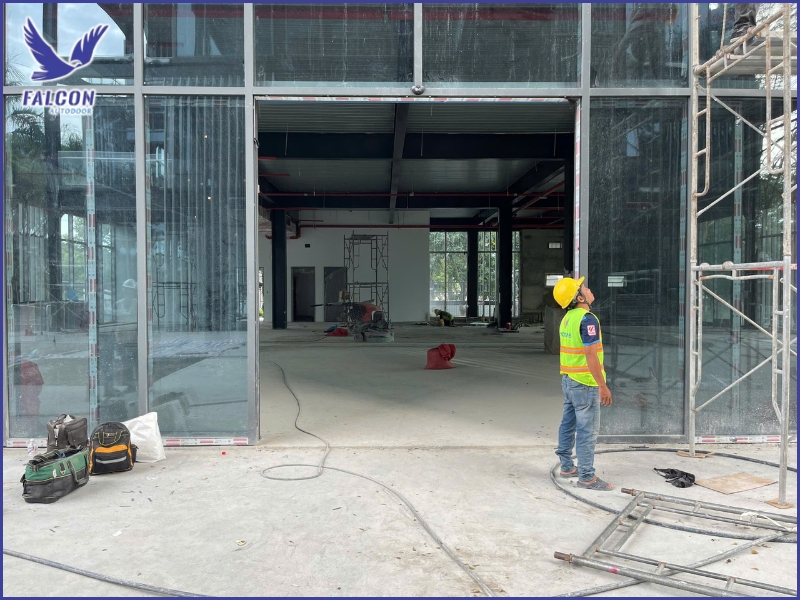
After installation, doors should be inspected every 3-6 months for rails, seals, sensors, and controllers. Proper maintenance keeps the door operating smoothly and maintaining soundproof and energy-saving performance. Choosing a reputable provider like Thuy Linh Long ensures professional after-sales service.
Automatic doors for apartment buildings are not only a technical solution but also a foundation for improving residents’ quality of life. Thanks to their ability to reduce noise, limit heat loss, and support security control, modern door systems help the lobby remain quiet, energy-efficient, and professionally operated. This is a long-term investment for both management and the residential community.
If your building is looking for a suitable automatic door solution, Thuy Linh Long is ready to support from on-site survey to design, installation, and maintenance. Contact us today to receive an optimal plan in terms of technique and budget, helping your apartment achieve noise reduction, energy saving, and enhanced image right from the entrance.
THUY LINH LONG SERVICES TRADING COMPANY LIMITED
DISTRIBUTOR
Address: 243D Vuon Lai Street, Phu Tho Hoa Ward, Tan Phu District,
Ho Chi Minh City, Vietnam.
Tel: +84 28 22497999
E-mail: cuatudong24h@gmail.com
SUPPLIER
KUM YANG MATERIALS CO.,LTD
Address: 124-60, Myeongdong-ro, Hallim-myeon,
Gimhae-si, Gyeongsangnam-do, 50851, Korea.
Tel: 82-55-345-8380


