


Automatic Doors for Food Processing Factories: Meeting Hygiene Standards
In food processing factories, maintaining hygiene and minimizing contamination risks are crucial factors in ensuring product quality and complying with food safety standards. The following article helps you understand the role of automatic doors in food production facilities and how to choose suitable solutions to meet strict hygiene requirements during the manufacturing process.
1. The role of automatic doors in food processing factories
Automatic doors are increasingly used in food processing plants thanks to their contactless operation, effective control of movement flow, and ability to maintain a clean production environment, helping businesses comply with strict hygiene standards in the food processing and storage industry.
1.1 Minimizing hand contact and reducing contamination risk
In food production environments, minimizing direct hand contact with shared surfaces is essential to reduce the risk of bacterial contamination, and automatic doors with sensor-based operation allow employees to move through without touching door handles, thereby helping maintain a high level of hygiene and protecting the safety of the entire production process.
1.2 Controlling movement between production areas
Food processing facilities are typically divided into different zones such as preparation, processing, packaging, and storage areas, so automatic doors act as control points that clearly separate these areas while guiding the movement of staff and materials to reduce the risk of cross-contamination between production stages.
1.3 Enhancing professionalism and automation in factories
Installing automatic doors not only improves hygiene standards but also contributes to modernizing factory operations, creating a professional working environment that integrates well with other automated systems and helping businesses build the image of a standardized manufacturing facility in the eyes of partners and inspection authorities.
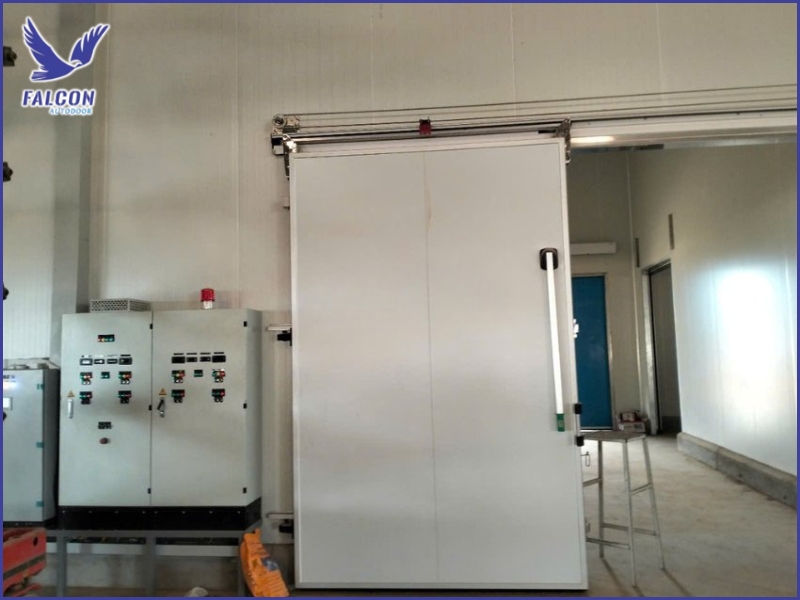
2. Hygiene standards required in the food industry
In the food production industry, factory entrance systems not only connect different areas but must also comply with strict standards regarding materials, design, and cleanability to ensure the production environment remains hygienic, limits bacterial growth, and complies with food quality management regulations.
2.1 Requirements for safe and easy-to-clean materials
Automatic doors in food factories are often made from materials such as stainless steel or powder-coated aluminum combined with tempered glass, because these materials have smooth surfaces, resist dirt buildup, are easy to clean, and do not corrode in environments with high humidity or frequent exposure to industrial cleaning chemicals.
2.2 Design that prevents dirt and bacteria accumulation
Door designs in food factories should minimize gaps, corners, or complex structures that may accumulate dirt and bacteria, while ensuring components such as sliding tracks, frames, and sealing gaskets are arranged properly to make cleaning faster and more effective.
2.3 Compliance with HACCP and GMP standards
Many food factories apply quality management systems such as HACCP or GMP, so automatic doors must be designed and installed to meet requirements related to hygiene control, movement control, and maintaining production environments that comply with food safety regulations.
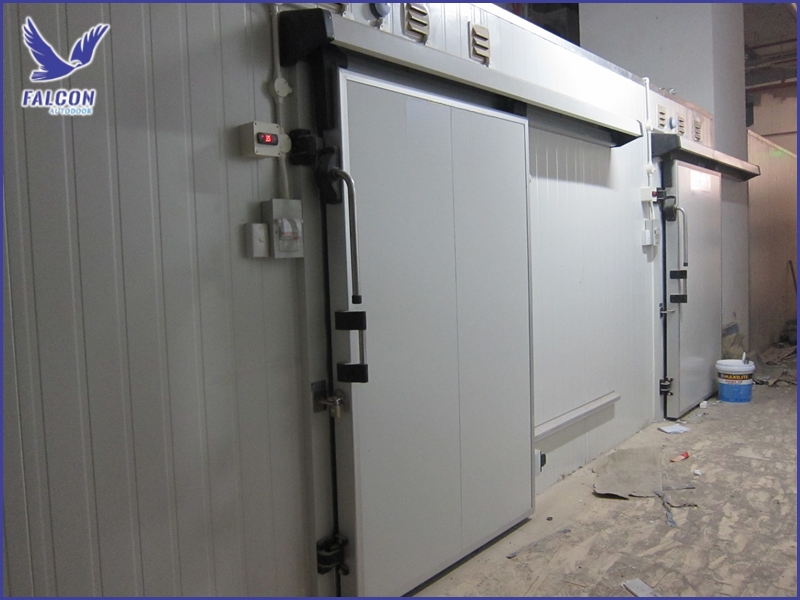
3. Benefits of automatic doors for the production environment
Besides ensuring hygiene standards, automatic doors also bring many practical benefits to food production environments such as controlling temperature conditions, improving movement efficiency within the factory, and maintaining stability throughout the entire production process.
3.1 Reducing cross-contamination risks between areas
Automatic doors help clearly separate functional zones in the factory, reducing direct contact between different movement flows such as employees, raw materials, and finished products, thereby minimizing the risk of microbial cross-contamination during food processing.
3.2 Controlling temperature and humidity in the factory
Fast and automatic opening and closing ensures the door closes immediately after someone passes through, reducing heat loss or cold air leakage in areas that require strict temperature control such as processing rooms, packaging areas, or food storage warehouses.
3.3 Increasing movement efficiency for staff and goods
With sensor-based automatic operation, employees can move between areas without stopping to open doors, which saves time, improves work efficiency, and helps the transportation of raw materials and finished products become faster and more convenient.
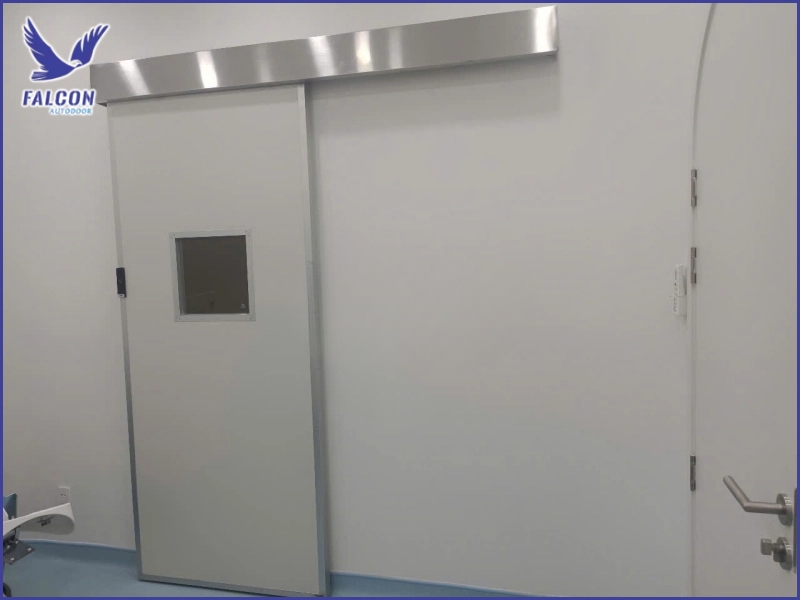
4. Suitable types of automatic doors for food factories
Depending on the characteristics of each area in a food production facility, businesses can choose different types of automatic doors to ensure efficient operation, meet hygiene requirements, and match the actual working environment.
4.1 Sealed automatic sliding doors for processing areas
Automatic sliding doors with sealed designs help prevent dust and bacteria from entering food processing areas while ensuring smooth and stable operation in environments with continuous, high-frequency usage.
4.2 High-speed automatic doors for logistics and transport areas
For areas where raw materials and finished products are transported, high-speed automatic doors help shorten opening and closing time, reduce heat loss, and support efficient goods movement while still maintaining a clean production environment.
4.3 Cleanroom automatic doors for high-hygiene areas
Certain areas in food factories such as packaging rooms or specialized processing zones may require cleanroom automatic doors with specialized designs that limit dust, control air pressure, and maintain environments that meet high hygiene standards.
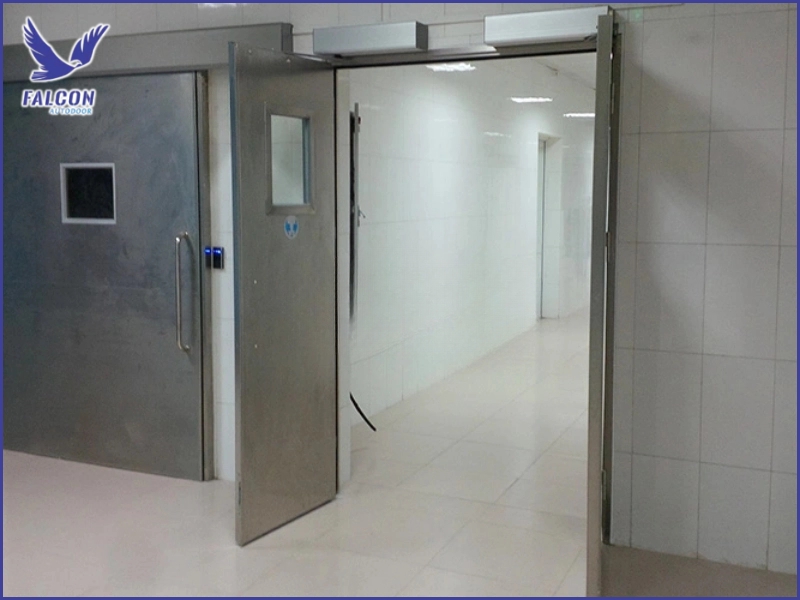
5. Important considerations when installing automatic doors in food factories
To ensure automatic door systems operate effectively and meet hygiene standards in the food industry, businesses should pay attention to choosing suitable equipment, proper installation, and regular maintenance throughout the system’s operation.
5.1 Choosing corrosion-resistant and easy-to-clean materials
Food factories are frequently cleaned with water and chemicals, so door materials must have strong corrosion resistance, smooth surfaces, and easy-clean properties to ensure efficient sanitation while maintaining long-term durability.
5.2 Integrating safety sensors and access control
Door systems should be equipped with motion sensors and safety sensors, and they can also be integrated with access control systems to ensure doors only open when necessary while improving safety and providing better control over important production areas.
5.3 Regular maintenance to maintain long-term hygiene standards
Periodic inspection and maintenance help detect issues early such as inaccurate sensors, dirty sliding tracks, or worn components, ensuring doors always operate smoothly and maintain hygiene standards in the factory.
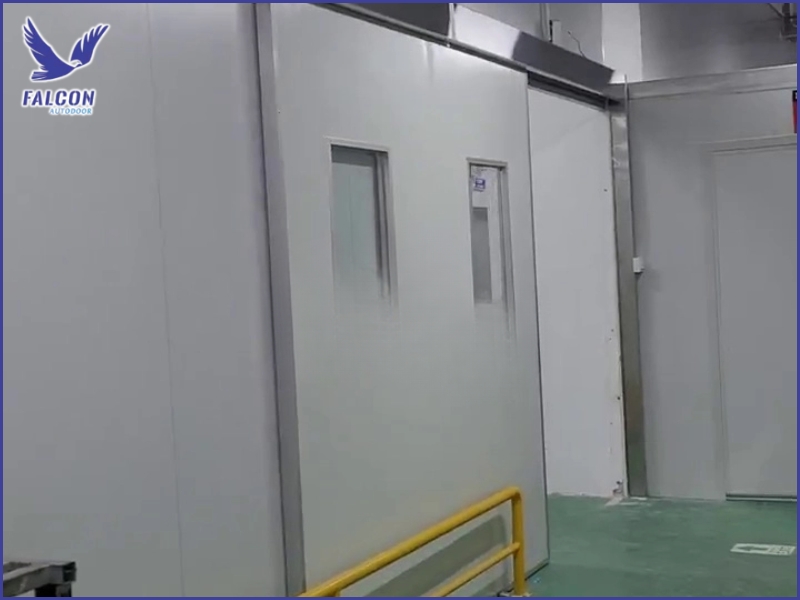
Automatic doors not only provide convenience for movement but also play an important role in maintaining hygiene standards in food processing factories. Choosing the right door type, installing it correctly, and performing regular maintenance will help businesses create a safe, clean production environment that meets the strict requirements of the food industry.
If you are looking for automatic door installation solutions for factories or food processing facilities, contact Thuy Linh Long for detailed consultation and to choose the most suitable door system, ensuring efficient operation and hygiene standards for your project.
THUY LINH LONG SERVICES TRADING COMPANY LIMITED
DISTRIBUTOR
Address: 243D Vuon Lai Street, Phu Tho Hoa Ward, Tan Phu District,
Ho Chi Minh City, Vietnam.
Tel: +84 28 22497999
E-mail: cuatudong24h@gmail.com
SUPPLIER
KUM YANG MATERIALS CO.,LTD
Address: 124-60, Myeongdong-ro, Hallim-myeon,
Gimhae-si, Gyeongsangnam-do, 50851, Korea.
Tel: 82-55-345-8380


