


Automatic doors for Grade A office buildings: Standards and technical requirements
Grade A office buildings require not only luxurious architecture but also high-standard technical systems, especially at entrance areas with heavy daily traffic. In this article, Thuy Linh Long explores the key standards and technical requirements when installing automatic doors for this premium building segment.
1. The role of automatic doors in Grade A office buildings
Automatic doors at the main lobby and secondary entrances are important components that shape the professional image of a Grade A office building from the first point of contact. Besides aesthetics, the door system must handle large pedestrian traffic and operate reliably during peak hours.
1.1 Creating a premium image aligned with architecture
Automatic doors should harmonize with glass façades, stone cladding, and the luxurious lobby space of a Grade A building. Using large tempered glass panels, premium aluminum frames, or brushed stainless steel enhances the aesthetic value and creates a professional impression for tenants and partners.
1.2 Ensuring smooth flow of large pedestrian traffic
During morning and evening peak hours, hundreds of employees and visitors continuously pass through the lobby area. Automatic doors must provide fast opening and closing speeds, quiet operation, and long-term durability to prevent congestion and maintain a professional building image.
1.3 Enhancing security control
Grade A buildings often require strict access control to ensure safety for office tenants. Automatic doors can integrate with access cards, facial recognition, or centralized control systems, enabling clear access authorization and improving overall building security.
2. Mandatory standards and technical requirements
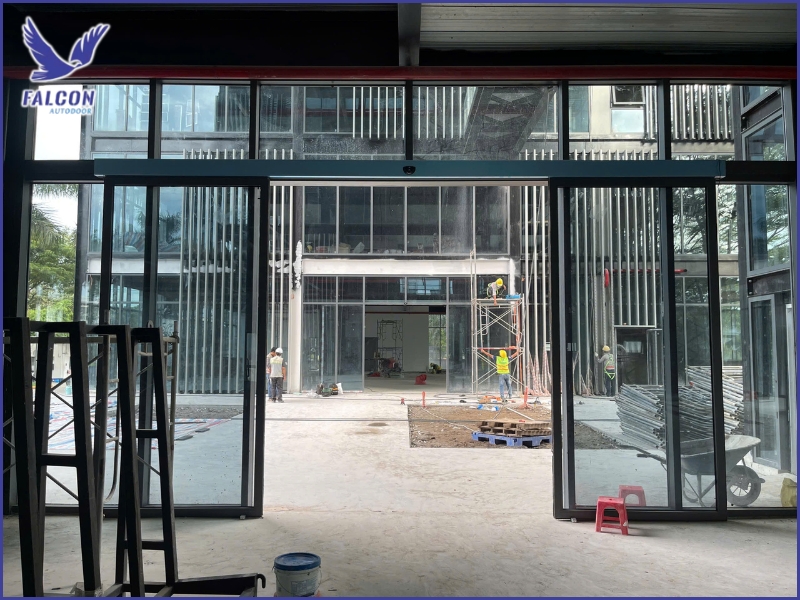
Automatic doors for Grade A office buildings must simultaneously meet standards for safety, durability, and continuous operation with high daily usage frequency. In addition, the door system should be compatible with access control, fire protection systems, and smart building management platforms to ensure technical synchronization.
2.1 Safety standards and smart sensors
The door system must integrate anti-pinch sensors, motion detection radar, and a reverse mechanism when obstacles are detected to protect users. International safety standards related to automatic doors should be strictly followed to minimize operational risks.
2.2 High-power motors with durable operation
Motors used in Grade A projects must withstand thousands of opening and closing cycles per day while maintaining stable performance. Sliding rails, rollers, and drive systems should be designed for heavy loads to minimize vibration and ensure long-term smooth operation.
2.3 Integration with building management systems (BMS)
Automatic doors should be able to connect with building management systems to monitor operational status and receive real-time fault alerts. This integration allows management teams to control traffic flow, optimize operations, and enhance the building’s professional management standards.
2.4 Compliance with fire safety requirements
In emergency situations, automatic doors must provide a free-opening mode or connect with fire alarm systems to ensure fast evacuation. Synchronization with fire protection systems helps the building comply with legal regulations and ensures safety for all occupants.
3. Requirements for premium design and materials
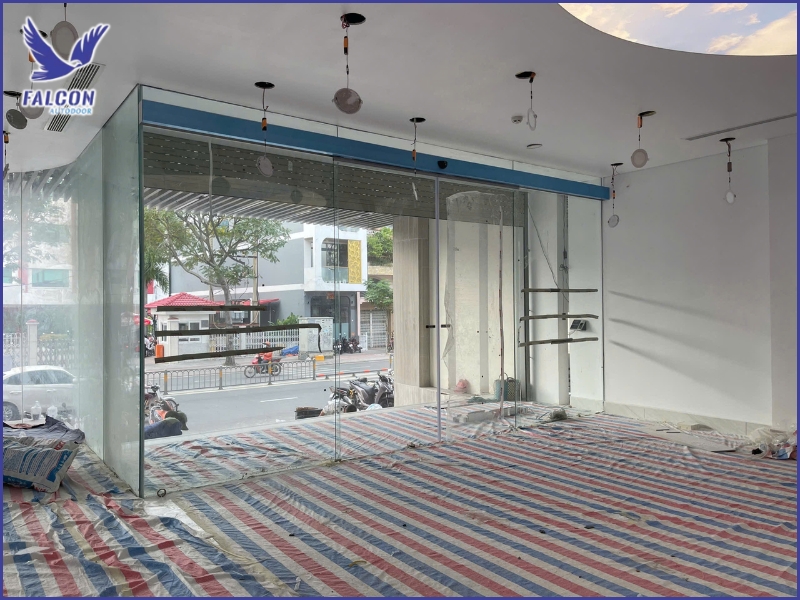
In addition to technical standards, automatic doors for Grade A office buildings must meet aesthetic requirements suitable for the premium segment of the project. Design, materials, and finishing details should be carefully selected to ensure elegance, consistency, and long-term durability.
3.1 Tempered glass and high-end Low-E glass
Glass used is typically thick tempered glass or Low-E glass to enhance insulation and reduce heat radiation entering the lobby area. This solution not only improves safety but also contributes to reducing air-conditioning energy consumption across the ground floor.
3.2 Precision-finished aluminum and stainless steel frames
Door frames should use high-quality anodized aluminum or brushed stainless steel with corrosion resistance to maintain a luxurious appearance over time. Precision fabrication and installation help minimize gaps, ensuring smooth operation and consistent aesthetics.
3.3 Soundproofing and thermal insulation capability
Lobby areas often face busy streets, so doors must help reduce noise and limit cold air loss. Sealed gaskets, sturdy frame structures, and appropriate glass solutions help maintain a quiet and professional working environment throughout the building.
3.4 Design integration with lobby interior systems
Automatic doors should harmonize with reception counters, lighting systems, and interior finishing materials to create a unified overall design. This integration enhances the building’s brand value and leaves a strong impression on visitors and business partners entering the lobby.
4. Experience in selecting and installing automatic doors for Grade A office buildings
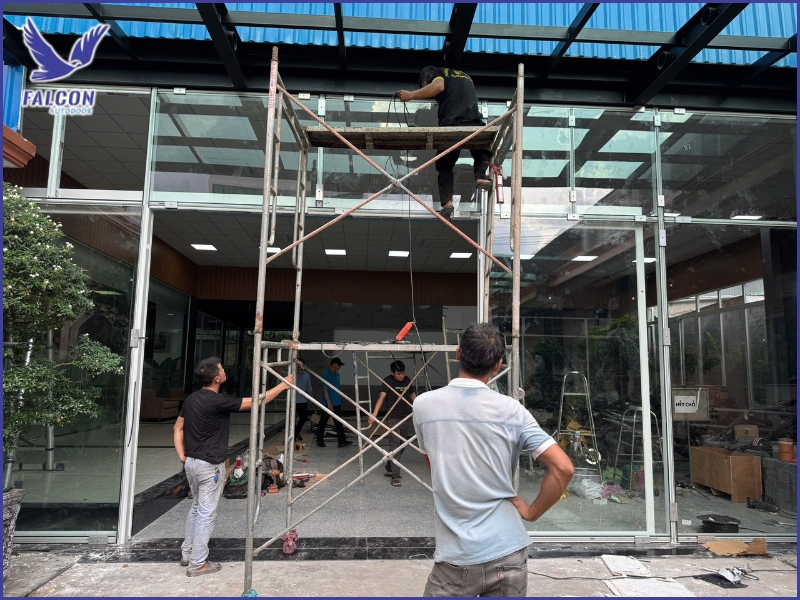
Selecting and installing automatic doors for Grade A office buildings should follow a professional process to ensure both technical and aesthetic consistency. The supplier must have experience implementing large-scale projects and be capable of meeting strict requirements regarding schedule and quality.
4.1 Surveying traffic flow and operational characteristics
Before proposing a door configuration, it is necessary to accurately assess the number of employees, visitors, and peak traffic periods during the day. A thorough site survey helps determine the appropriate motor capacity, door size, and opening speed to avoid overload or unnecessary investment.
4.2 Professional installation and system integration
Installation must ensure high precision from sliding rails and motors to sensor systems so the door can operate smoothly and reliably over time. At the same time, the door system should be integrated with access control, BMS, and fire protection systems to maintain safety and professionalism throughout the building.
4.3 Periodic maintenance and rapid incident response
Grade A buildings require door systems to operate continuously with minimal downtime. Therefore, a clear periodic maintenance plan and a responsive technical support team are necessary to quickly handle incidents and maintain the professional image of the building.
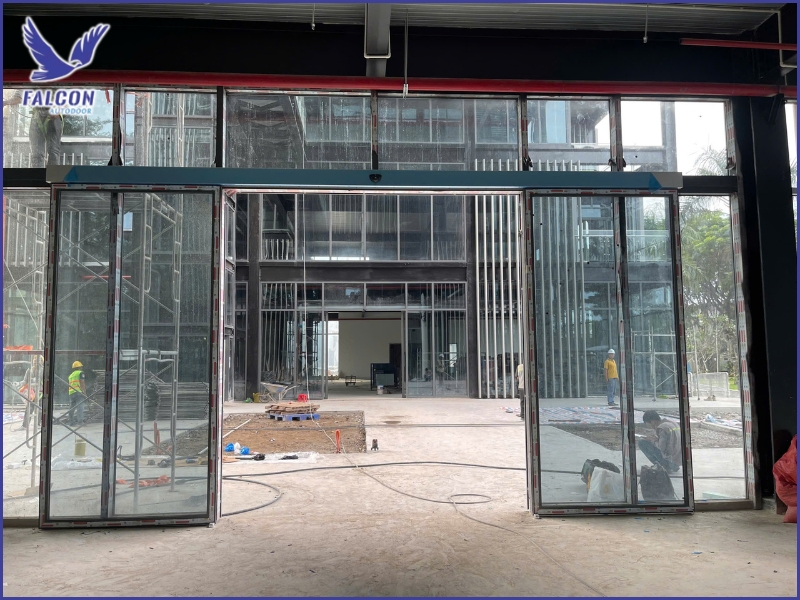
Automatic doors for Grade A office buildings are not only a technical component but also a factor that reflects the prestige, professionalism, and operational capability of the entire building. Choosing a high-standard solution helps ensure safety, optimize pedestrian traffic flow, and enhance brand image in the eyes of tenants and partners.
If you are looking for a high-quality automatic door solution for a Grade A office project, Thuy Linh Long is ready to advise the most suitable configuration according to the scale and practical requirements of each building. Contact Thuy Linh Long today for site surveys, optimal technical proposals, and professional installation to ensure long-term, reliable operation.
THUY LINH LONG SERVICES TRADING COMPANY LIMITED
DISTRIBUTOR
Address: 243D Vuon Lai Street, Phu Tho Hoa Ward, Tan Phu District,
Ho Chi Minh City, Vietnam.
Tel: +84 28 22497999
E-mail: cuatudong24h@gmail.com
SUPPLIER
KUM YANG MATERIALS CO.,LTD
Address: 124-60, Myeongdong-ro, Hallim-myeon,
Gimhae-si, Gyeongsangnam-do, 50851, Korea.
Tel: 82-55-345-8380


