


Energy-saving automatic doors: How to optimize sensors and opening-closing time
Automatic doors bring convenience and professionalism to many business models, but they can also increase electricity costs if the settings are not optimized. In the following article, Thuy Linh Long will explore how to adjust sensors and opening-closing time so the system operates more efficiently and saves energy.
1. Why do automatic doors affect electricity costs?
Automatic doors not only consume electricity for motor operation but also indirectly affect the overall energy consumption of the entire building. If not configured properly, the system can significantly increase monthly operating costs.
1.1 Direct power consumption from motors and control boards
Motors, central controllers, and sensors all use electricity continuously, especially in areas with high opening and closing frequency. When the door operates with frequent cycles or heavy loads, the level of electricity consumption will increase accordingly.
1.2 Heat loss due to doors staying open too long
When the door remains open for a long time, cool or warm air from the air-conditioning system escapes outside. This forces the HVAC system to work harder to maintain stable indoor temperatures, significantly increasing electricity bills.
1.3 Impact on air-conditioning system efficiency
In commercial buildings, shopping malls, or restaurants, continuously operating automatic doors can reduce temperature control efficiency. If opening and closing times are not optimized, the electricity cost for air conditioning can be much higher than the direct power consumption of the door itself.
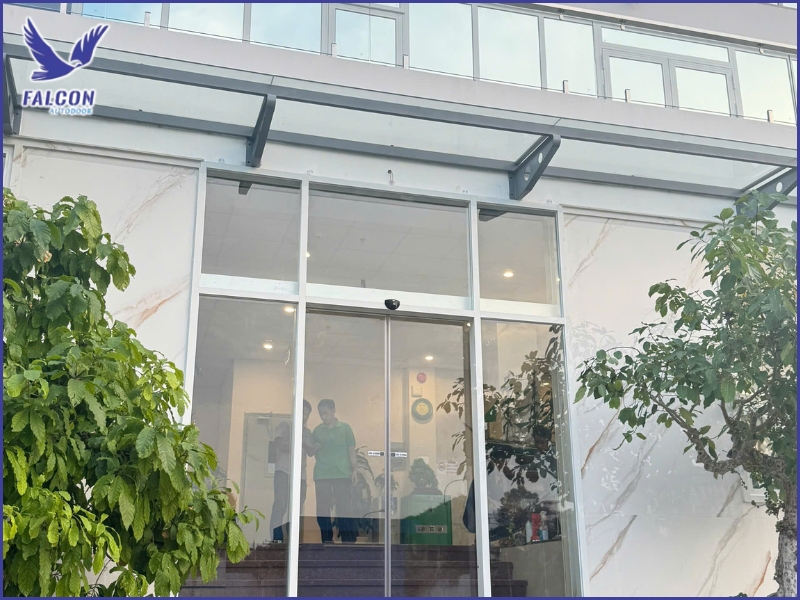
2. Optimizing sensors to reduce energy waste
Sensors act as the “activation brain” of automatic doors, determining when the door opens and closes. If configured improperly, the door may open at the wrong time, open too early, or be triggered repeatedly, causing energy waste and heat loss.
2.1 Choosing the right type of sensor (radar, infrared, or combination)
Each sensor type works based on different operating principles, so it is important to choose the right one for the usage environment. In crowded areas, radar sensors can detect movement effectively, while infrared sensors are suitable for spaces requiring higher accuracy to avoid false triggers.
2.2 Adjusting detection range and scanning angle to avoid false triggers
A scanning angle that is too wide may cause the door to open when someone simply walks past without intending to enter. Narrowing the detection area, adjusting installation height, and setting the correct scanning direction can reduce unnecessary openings and significantly save electricity.
2.3 Setting sensitivity based on actual traffic flow
In locations where traffic changes throughout the day, sensor sensitivity should be adjusted flexibly. Lower sensitivity during off-peak hours helps reduce random activation, while higher sensitivity during peak hours ensures smooth movement while still controlling energy consumption.
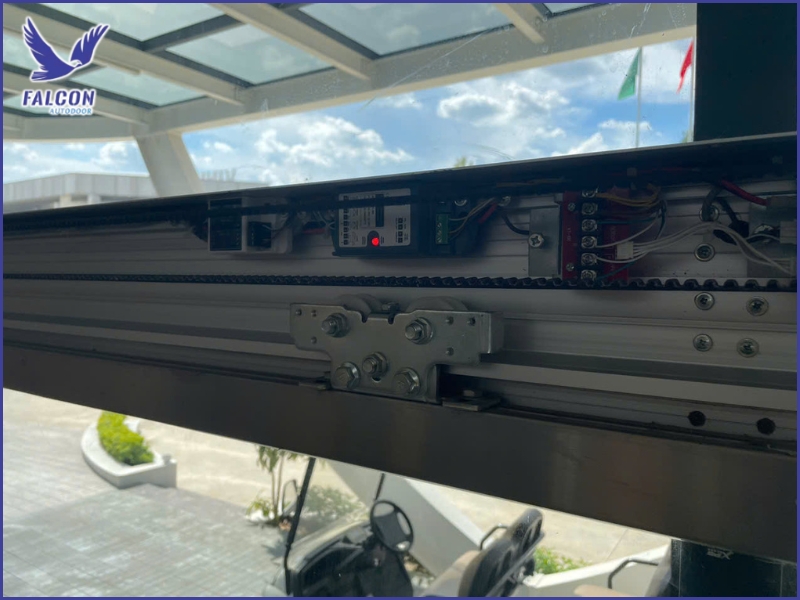
3. Optimizing opening and closing time to save electricity effectively
Besides sensors, the duration that the door remains open directly affects electricity consumption and heat loss. Proper configuration helps balance movement convenience with long-term operating costs.
3.1 Adjusting Hold Open Time appropriately
If the door remains open too long after each activation, a significant amount of conditioned air will be lost. Setting a suitable hold-open duration that matches the average walking speed of users helps reduce the workload on the air-conditioning system.
3.2 Setting optimal opening and closing speed
Opening too slowly prolongs the time of heat loss, while closing too quickly may create discomfort or safety risks. Adjusting the speed according to the flow of people allows the door to operate smoothly, save energy, and still ensure a good user experience.
3.3 Applying automatic modes based on time schedules
Some controllers allow operation modes to be configured according to time periods during the day. For example, at night or during off-peak hours, the system can switch to single-leaf opening mode or reduce sensor sensitivity, thereby limiting unnecessary operations and optimizing overall electricity costs.
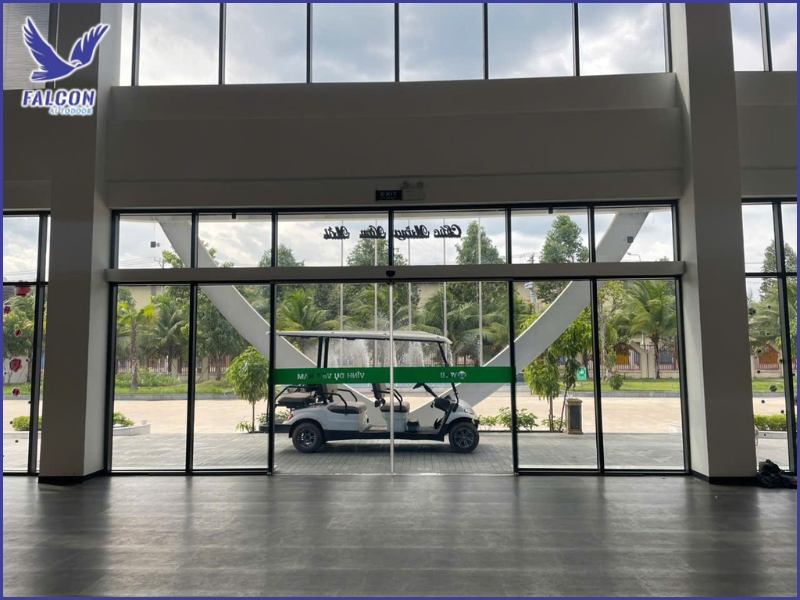
4. Regular maintenance to maintain energy-saving performance
Even when sensors and opening times are optimized, automatic doors can still consume more electricity if they are not maintained properly. Regular inspections help the system operate smoothly, reduce friction, and prevent unintended activations.
4.1 Checking and cleaning sensors regularly
Dust, insects, or moisture can reduce sensor accuracy, causing the door to open at the wrong time. Periodic cleaning helps sensors detect movement more precisely and reduces unnecessary activations.
4.2 Maintaining motors and sliding rails
Motors working under heavy load due to dirty rails, misalignment, or lack of lubrication will consume more electricity than usual. Lubricating, aligning the rails, and checking component wear help the door operate smoothly and reduce energy consumption.
4.3 Updating and checking the central controller
The control board is where all door operating parameters are configured. Checking, updating, and recalibrating settings according to actual usage conditions ensures the system always runs in the most optimal and energy-efficient state.
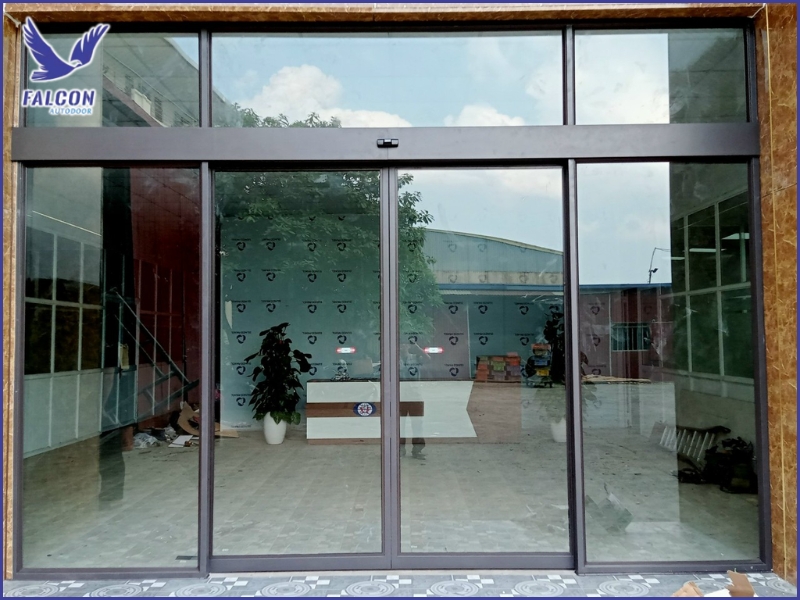
5. Technology solutions that help automatic doors save energy
In addition to optimized settings and maintenance, applying modern technologies can make automatic doors operate more intelligently and reduce long-term energy consumption. This is a trend increasingly adopted by commercial buildings and office complexes.
5.1 Using energy-efficient brushless motors
Brushless motors have higher efficiency, less friction, and reduced mechanical wear compared with traditional motors. As a result, doors operate more quietly, consume less electricity, and extend the lifespan of the entire system.
5.2 Integrating smart sensors and AI
Next-generation sensors can better distinguish movement direction and filter interference. When combined with intelligent algorithms, the system can accurately identify entry and exit needs, minimizing unnecessary door openings.
5.3 Connecting to the Building Management System (BMS)
Integrating automatic doors with a Building Management System (BMS) allows synchronization with air conditioning, lighting, and security systems. As a result, doors can automatically adjust their operating mode based on real-time conditions, helping optimize energy consumption across the entire building.
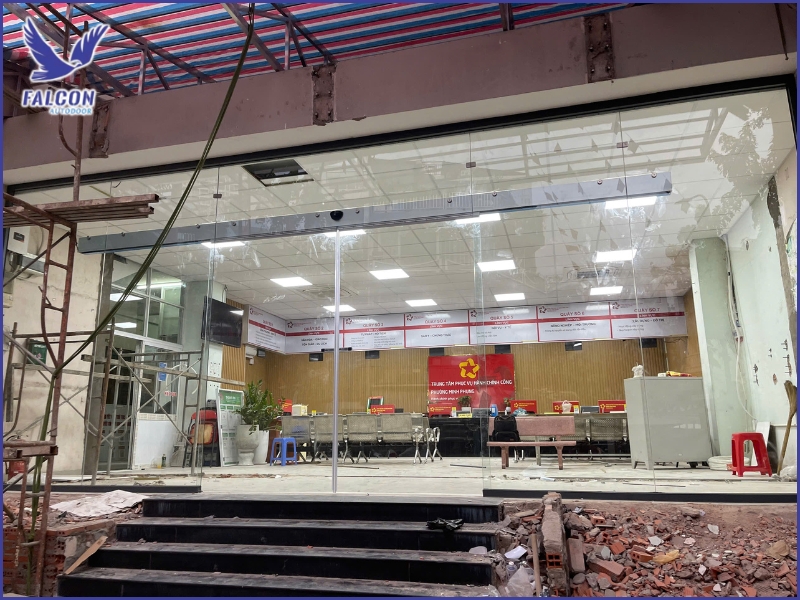
Optimizing energy consumption for automatic doors is not only about choosing quality equipment but also about how the system is configured, operated, and maintained throughout its lifecycle. When sensors are properly adjusted, opening and closing time is optimized, and the system is maintained regularly, businesses can significantly reduce electricity costs while still ensuring convenience and professionalism for their facilities. Investing in energy-saving solutions for automatic doors is essentially an investment in long-term operational efficiency and sustainable building value.
If you are looking for energy-saving automatic door solutions optimized for different models such as hotels, restaurants, hospitals, or shopping centers, contact the technical team at Thuy Linh Long today. We are ready to conduct on-site surveys, recommend suitable configurations, and support you throughout installation, operation, and maintenance.
THUY LINH LONG SERVICES TRADING COMPANY LIMITED
DISTRIBUTOR
Address: 243D Vuon Lai Street, Phu Tho Hoa Ward, Tan Phu District,
Ho Chi Minh City, Vietnam.
Tel: +84 28 22497999
E-mail: cuatudong24h@gmail.com
SUPPLIER
KUM YANG MATERIALS CO.,LTD
Address: 124-60, Myeongdong-ro, Hallim-myeon,
Gimhae-si, Gyeongsangnam-do, 50851, Korea.
Tel: 82-55-345-8380


