


How to design an entrance for maximum automatic door performance
A well-designed entrance does much more than enhance the appearance of a building. It also allows an automatic door system to operate smoothly, improves pedestrian flow, increases safety, and extends the lifespan of the equipment. Let's explore how proper entrance design helps maximize the performance of automatic doors with Thuy Linh Long.
1. Why does entrance design affect automatic door performance?
The efficiency of an automatic door depends not only on the quality of the equipment but also on how the entrance is designed, as proper planning of the installation area, pedestrian flow, and surrounding space enables the system to operate smoothly, minimizes unnecessary wear, reduces technical issues, and provides a safer and more convenient experience for users.
1.1 The relationship between entrance design and door operation
The size of the entrance, installation position, and surrounding environment directly influence the opening and closing movement of an automatic door, and when these factors are properly designed, the system can operate smoothly, reduce unnecessary mechanical stress, minimize collisions, and maintain stable long-term performance.
1.2 Impact on user experience
A thoughtfully designed entrance allows people to move comfortably while enabling the automatic door to respond at the correct moment, creating a seamless and convenient access experience, especially in busy environments such as offices, shopping centers, hospitals, and commercial buildings.
1.3 Effect on service life and operating costs
When the entrance is designed to match the specifications and operating requirements of the automatic door system, unnecessary strain on the motor and mechanical components is reduced, helping minimize wear, extend equipment lifespan, lower maintenance costs, and improve overall operational efficiency.
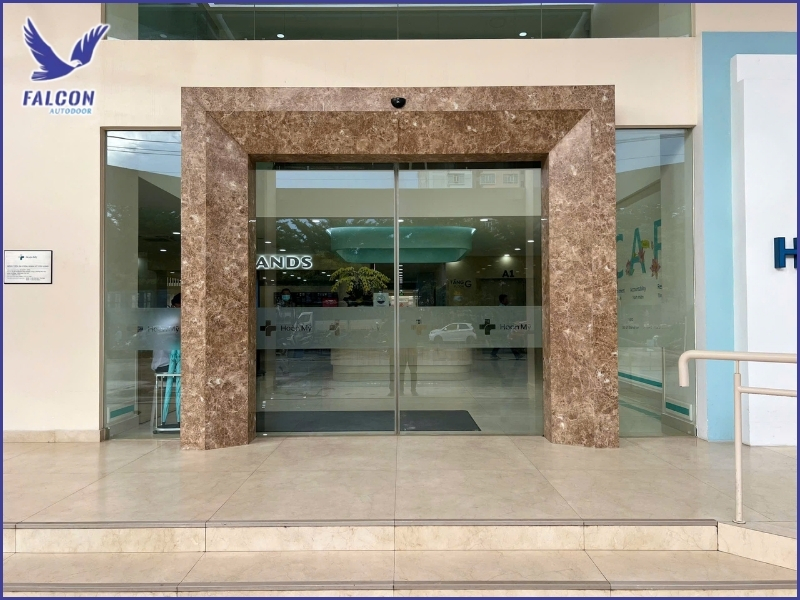
2. Key considerations when designing an entrance for automatic doors
To maximize the performance of an automatic door system, the entrance should be designed as an integrated part of the building, considering dimensions, surrounding space, sensor placement, floor conditions, and environmental factors to ensure reliable operation, user safety, and long-term durability.
2.1 Choose appropriate entrance dimensions
The width and height of the entrance should be determined according to pedestrian traffic, accessibility requirements, and the selected automatic door model, ensuring comfortable movement while maximizing operational efficiency without wasting valuable building space.
2.2 Provide sufficient opening and closing clearance
Every automatic door requires adequate clearance for smooth movement, so enough space should be available in front of, behind, or beside the doorway to prevent contact with walls, columns, furniture, or other obstacles that could interfere with normal operation.
2.3 Position sensors correctly
Automatic door sensors should be installed with an appropriate detection angle that matches pedestrian movement while avoiding locations affected by direct sunlight, strong wind, reflective surfaces, or unrelated motion, ensuring accurate detection and reliable door activation during daily operation.
2.4 Design a level and safe floor surface
The entrance floor should be flat, stable, and free from significant height differences or obstructions, allowing the automatic door to operate smoothly while providing safe and convenient access for elderly users, children, wheelchairs, strollers, and mobility equipment.
2.5 Optimize lighting and minimize interference
The entrance should provide adequate lighting while minimizing environmental factors such as strong winds, direct sunlight, or constant movement within the sensor detection area, helping prevent false activations and ensuring the automatic door maintains stable performance over time.
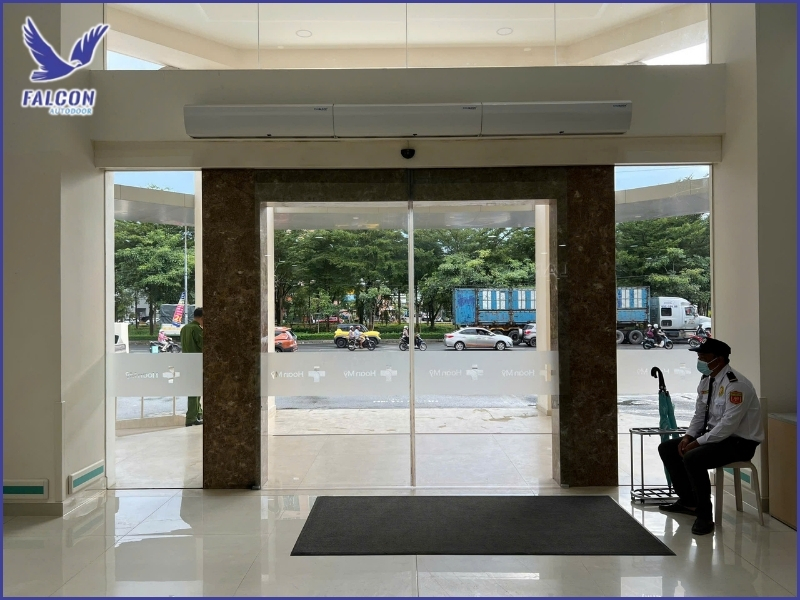
3. Entrance design for different building types
Different buildings have unique traffic patterns, operational requirements, and architectural characteristics, so entrance design should be tailored to each application to maximize automatic door performance while ensuring safety, convenience, and efficient pedestrian movement.
3.1 Offices and commercial buildings
Office buildings and commercial facilities should feature entrances wide enough to accommodate peak pedestrian traffic, together with clearly organized circulation paths and waiting areas that allow automatic doors to operate continuously without causing congestion or unnecessary interruptions.
3.2 Hospitals and healthcare facilities
Hospital entrances should prioritize wide access routes, level flooring, and unobstructed movement for wheelchairs, patient beds, and medical carts, while automatic doors should be designed to support continuous operation, hygiene requirements, and reliable performance throughout the day.
3.3 Hotels, restaurants, and showrooms
Entrances for hotels, restaurants, and showrooms should combine functional convenience with elegant architectural design, creating a welcoming first impression while providing adequate door clearance and smooth automatic operation to enhance the overall customer experience.
3.4 Homes, villas, and residential buildings
Residential entrances should blend harmoniously with the property's architectural style while providing enough space for automatic door operation, with sensors and control systems positioned strategically to maximize convenience, safety, and efficient use of available space.
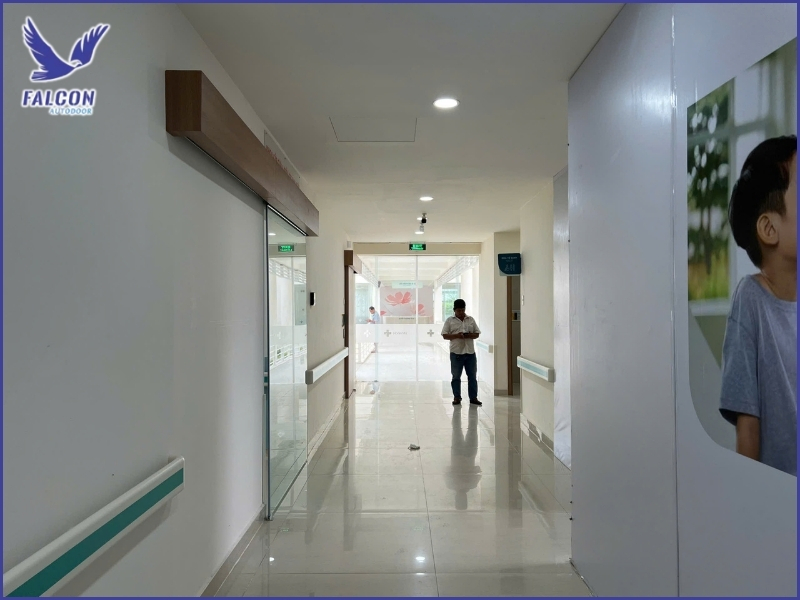
4. Thuy Linh Long provides professional entrance design and automatic door solutions
Choosing an experienced automatic door specialist ensures every stage of the project, from site assessment and design to installation and long-term maintenance, is professionally managed to deliver reliable performance, enhanced safety, and lasting operational efficiency.
4.1 Site inspection and usage assessment
The technical team at Thuy Linh Long conducts a comprehensive evaluation of the building layout, pedestrian traffic, entrance conditions, and operational requirements to recommend the most suitable automatic door solution while maximizing available space and system performance.
4.2 Customized entrance design solutions
Based on the site assessment, Thuy Linh Long develops tailored entrance designs and recommends the most appropriate automatic door system to complement the building architecture while improving pedestrian flow, aesthetics, durability, and long-term operational reliability.
4.3 Professional installation and complete system integration
Installation is carried out according to professional engineering standards, including precise alignment of guide rails, motors, sensors, and control systems to ensure the entire automatic door system operates quietly, accurately, and consistently with minimal operational issues.
4.4 Long-term maintenance, upgrades, and technical support
After installation, Thuy Linh Long continues supporting customers through scheduled maintenance, technical inspections, system optimization, and upgrade recommendations, helping maintain reliable operation, extend equipment lifespan, and ensure the automatic door continues meeting changing operational needs.
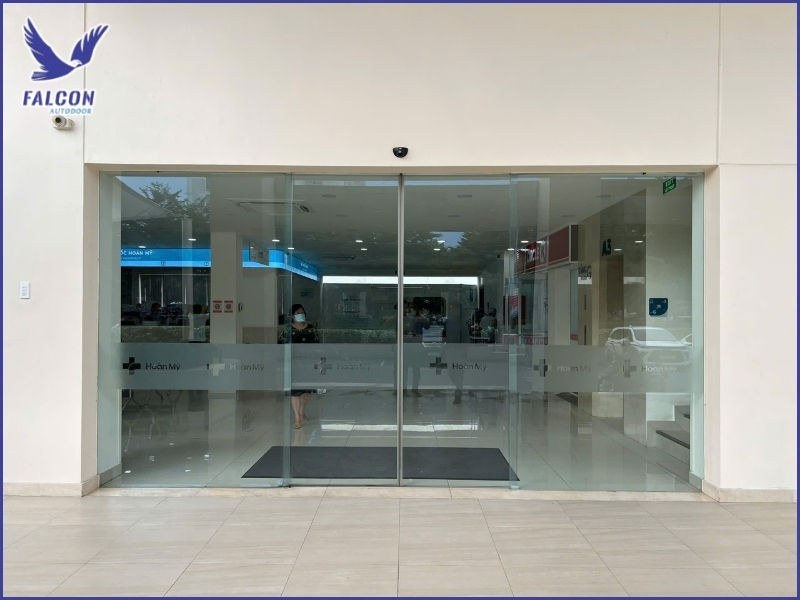
A properly designed entrance is one of the most important factors in maximizing the performance of an automatic door system, improving user experience, enhancing safety, and extending equipment lifespan, making careful planning essential from the earliest stages of building design and construction.
If you are looking for a professional automatic door design and installation solution tailored to your project, contact Thuy Linh Long for expert consultation, on-site assessment, and high-quality installation services that ensure reliable, efficient, and long-lasting performance.
THUY LINH LONG SERVICES TRADING COMPANY LIMITED
DISTRIBUTOR
Address: 243D Vuon Lai Street, Phu Tho Hoa Ward, Tan Phu District,
Ho Chi Minh City, Vietnam.
Tel: +84 28 22497999
E-mail: cuatudong24h@gmail.com
SUPPLIER
KUM YANG MATERIALS CO.,LTD
Address: 124-60, Myeongdong-ro, Hallim-myeon,
Gimhae-si, Gyeongsangnam-do, 50851, Korea.
Tel: 82-55-345-8380


