


Proper automatic door cleaning guide to extend equipment lifespan
Cleaning automatic doors correctly not only ensures smooth operation but also helps extend equipment lifespan and reduce unexpected malfunctions during use. The following guide explains how to properly clean automatic doors according to technical standards, helping you protect the door system effectively and maintain long-term durability.
1. Why proper periodic cleaning of automatic doors is essential
Automatic door cleaning is not merely about surface cleanliness it directly impacts operational performance and the durability of the entire system. When doors operate daily in dusty environments, mechanical and electronic components can deteriorate rapidly if they are not cleaned properly and regularly.
1.1 Impact of dust and environmental factors on automatic door systems
Dust, fine sand, and moisture can accumulate over time on sliding tracks, rollers, and motors, increasing friction during operation. In high-traffic areas or outdoor environments, these factors significantly increase the risk of door jamming, abnormal noise, and reduced operating efficiency.
1.2 Benefits of proper cleaning for equipment lifespan
Cleaning automatic doors according to proper standards allows moving components to operate smoothly, reduces wear, and prevents motor overload. In addition, cleaning sensors and control units ensures more accurate signal detection, helping extend equipment lifespan and reduce maintenance and repair costs.
1.3 Risks of neglecting or improperly cleaning automatic doors
If automatic doors are not cleaned regularly or are cleaned incorrectly, accumulated dirt can cause track misalignment, door jamming, and internal component damage. Moreover, using inappropriate chemicals or improper techniques may damage door surfaces and compromise operational safety.
2. Preparation before cleaning automatic doors
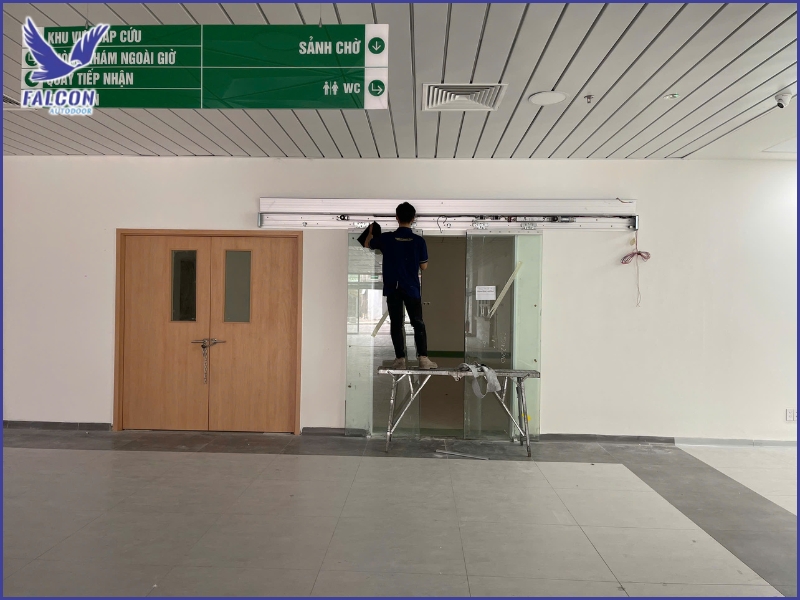
Before cleaning an automatic door, proper preparation is critical to ensure operator safety and prevent equipment damage. Careful preparation helps the cleaning process run smoothly, saves time, and improves overall effectiveness.
2.1 Disconnecting the power supply and ensuring operational safety
The first step is to completely disconnect the power supply to prevent the door from operating unexpectedly during cleaning. Warning signs should be placed, and access around the door should be restricted especially in active buildings to ensure safety.
2.2 Suitable cleaning tools and materials for automatic doors
Using appropriate cleaning tools helps prevent scratches and surface damage. Soft cloths, dust brushes, handheld vacuum cleaners, and specialized cleaning solutions are recommended. Avoid corrosive chemicals or hard tools that may damage components.
2.3 Important checks before starting the cleaning process
Before cleaning, perform a quick inspection to identify issues such as track misalignment, loose screws, or unusual noise. Documenting the initial condition helps evaluate cleaning effectiveness and allows timely action if deeper maintenance is required.
3. Standard technical process for cleaning automatic doors
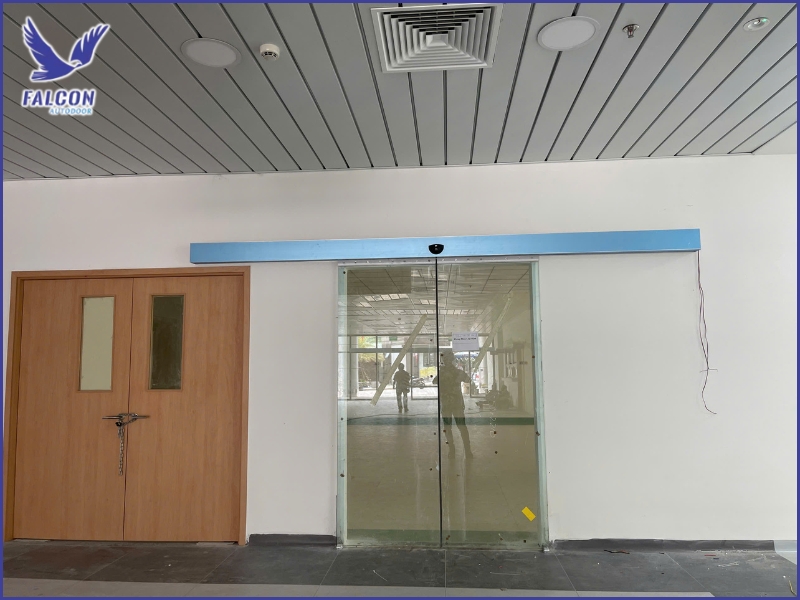
Following the correct technical cleaning process ensures each component is cleaned effectively without compromising system structure or performance. Cleaning should be done step by step, focusing on areas where dirt accumulation most affects door operation.
3.1 Cleaning door panels and glass or surface materials
Door panels are directly exposed to environmental elements and should be cleaned regularly. Use a soft cloth and appropriate cleaning solution to wipe glass or surface materials gently, avoiding excessive force that could cause scratches. Proper cleaning maintains cleanliness, aesthetics, and reduces recontamination.
3.2 Cleaning sliding tracks, rollers, and mechanical components
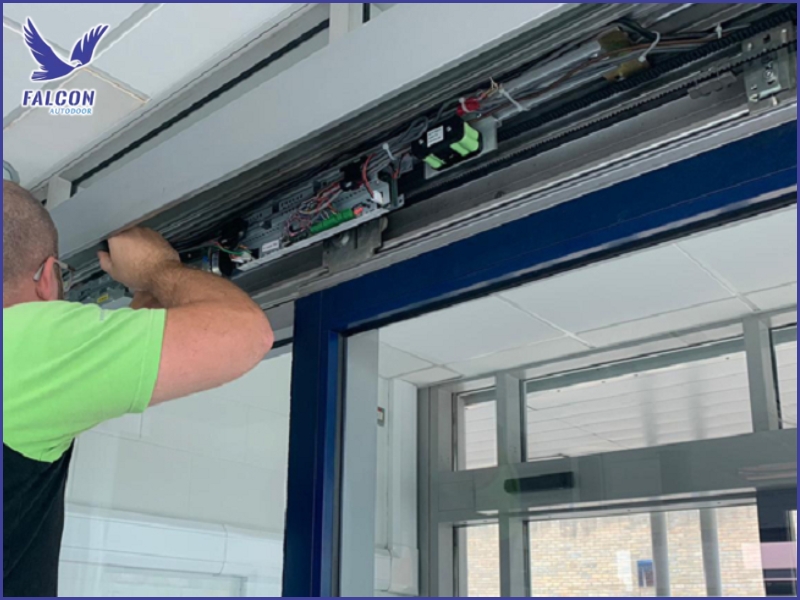
Sliding tracks and rollers are prone to collecting dust, sand, and debris that obstruct door movement. Use a soft brush or vacuum cleaner to remove debris, then wipe dry and apply light lubrication if necessary. This helps ensure smooth operation and reduces mechanical wear.
3.3 Cleaning safety sensors and control components
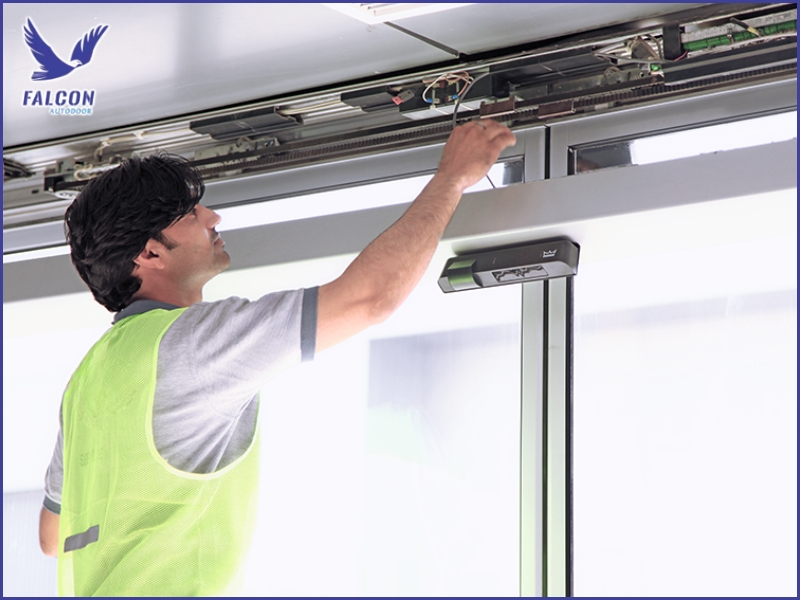
Safety sensors should be gently wiped with a dry or slightly damp cloth to maintain accurate detection. Avoid spraying water or cleaning solutions directly onto sensors and control units, as this may cause electrical short circuits. Keeping these components clean ensures fast and safe door response.
3.4 Operational check after completing the cleaning process
After cleaning, restore the power supply and test door operation. Observe opening and closing movements, listen for abnormal sounds, and verify sensor responsiveness. If any irregularities are detected, stop using the door and contact technical support promptly.
4. Notes and recommendations for long-term automatic door durability
In addition to proper cleaning, users should follow key operational and maintenance practices to ensure long-term stability and minimize wear. Correct usage habits and maintenance routines significantly enhance durability and operational efficiency.
4.1 Appropriate cleaning frequency based on usage environment
Cleaning frequency should be adjusted according to installation location and usage intensity. In dusty areas or high-traffic environments, more frequent cleaning is necessary to prevent debris buildup that can cause door jamming and reduced performance.
4.2 Common mistakes to avoid when cleaning automatic doors
Common mistakes include using strong chemicals, spraying water directly onto motors or control units, and dismantling technical components without expertise. Improper cleaning can shorten equipment lifespan and increase safety risks during operation.
4.3 When to combine cleaning with professional maintenance
If automatic doors produce unusual noise, operate inconsistently, or have been in use for an extended period, cleaning should be combined with professional maintenance. Periodic inspection, adjustment, and servicing by qualified technicians help identify hidden issues early and ensure long-term safe operation.
Proper automatic door cleaning is a critical step in maintaining stable operation, preventing malfunctions, and extending equipment lifespan. When cleaned and maintained correctly, automatic door systems deliver improved safety, performance, and aesthetic value for any building.
To keep your automatic doors operating reliably and efficiently, schedule regular cleaning and combine it with professional maintenance when necessary. If you need expert consultation or technical support, Thuy Linh Long is ready to assist you in maintaining a safe, stable, and long-lasting automatic door system.
THUY LINH LONG SERVICES TRADING COMPANY LIMITED
DISTRIBUTOR
Address: 243D Vuon Lai Street, Phu Tho Hoa Ward, Tan Phu District,
Ho Chi Minh City, Vietnam.
Tel: +84 28 22497999
E-mail: cuatudong24h@gmail.com
SUPPLIER
KUM YANG MATERIALS CO.,LTD
Address: 124-60, Myeongdong-ro, Hallim-myeon,
Gimhae-si, Gyeongsangnam-do, 50851, Korea.
Tel: 82-55-345-8380


