


Proper technical guide for installing automatic swing doors
Automatic swing doors are increasingly applied in various types of buildings thanks to their convenience and high safety standards. In the following guide, Thuy Linh Long provides step-by-step instructions for installing automatic swing doors correctly, ensuring stable operation and long-term performance.
1. Assessing installation conditions before installing automatic swing doors
Before installing an automatic swing door, accurately evaluating site conditions is a mandatory step to ensure proper technical performance. Initial assessment helps determine project suitability, minimize installation errors, and avoid costly adjustments later.
1.1 Analyzing door opening conditions and wall structure
The door opening must be checked for dimensions, surface flatness, and the load-bearing capacity of the wall or frame. For automatic swing doors, the mounting structure must be strong enough to support the door leaf weight and withstand motor forces during continuous operation.
1.2 Checking opening direction, door leaf weight, and operating clearance
Correctly determining the opening direction and swing angle ensures smooth operation without obstructing walkways. Door leaf weight must be calculated accurately to select a suitable motor, preventing overload or unstable performance.
1.3 Identifying usage purpose and opening frequency
Each building type such as offices, hospitals, or public entrances has different usage characteristics. Clearly defining usage purpose and opening frequency helps select the appropriate automatic swing door configuration, ensuring durability and long-term operational efficiency.
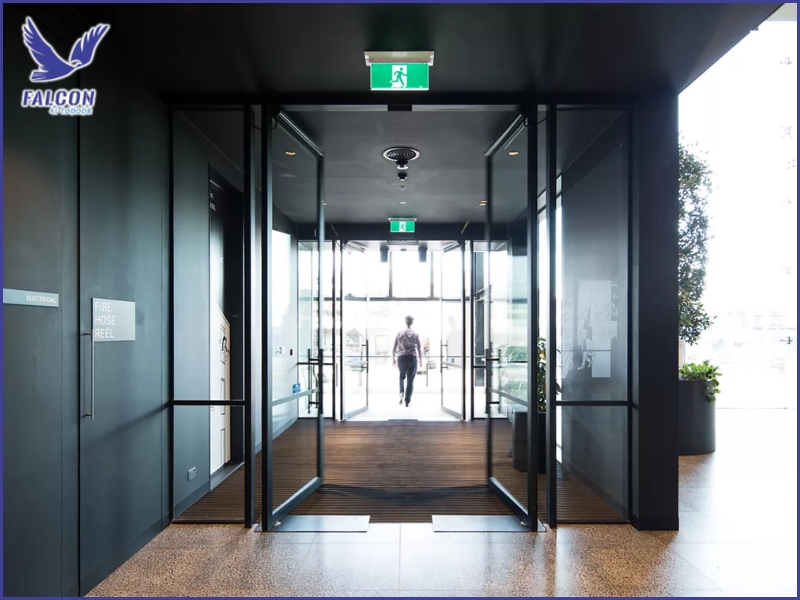
2. Preparing equipment and accessories for automatic swing door systems
After assessing installation conditions, preparing the correct equipment and accessories is critical to installation quality and long-term performance. Selecting compatible and coordinated components ensures smooth installation and minimizes technical issues.
2.1 Main components of an automatic swing door system
A standard automatic swing door system includes a door motor, swing arm or drive mechanism, central control unit, activation sensors, and installation accessories. Each component must meet quality standards and match the door configuration for stable operation.
2.2 Power supply and control system requirements
The power supply for automatic swing doors must be stable and comply with manufacturer specifications. The control system should be positioned conveniently for parameter configuration and troubleshooting during operation.
2.3 Checking compatibility between the motor and door leaf
The motor must be selected based on door leaf weight, size, and material. Verifying compatibility before installation helps prevent motor overload, slow operation, or failure to achieve the desired opening angle.

3. Proper technical process for installing automatic swing doors
Installing automatic swing doors must follow a precise technical sequence to ensure accurate, safe, and stable operation. Each installation step directly affects overall system performance.
3.1 Installing the motor and swing arm at correct technical positions
The door motor must be securely fixed to the wall or support structure at the correct height and distance. The swing arm or drive mechanism must be installed with proper orientation and angle to ensure consistent force transmission during opening and closing.
3.2 Adjusting opening travel, swing angle, and operating speed
After motor installation, the door opening travel should be adjusted to suit the available space. Opening angle and operating speed must be balanced to provide user convenience while minimizing collision risk and reducing motor strain.
3.3 Connecting sensors and the central control unit
Activation sensors and the central control unit must be connected according to the technical wiring diagram and tested for signal accuracy. Proper sensor placement ensures responsive door operation and enhances safety during real-world use.
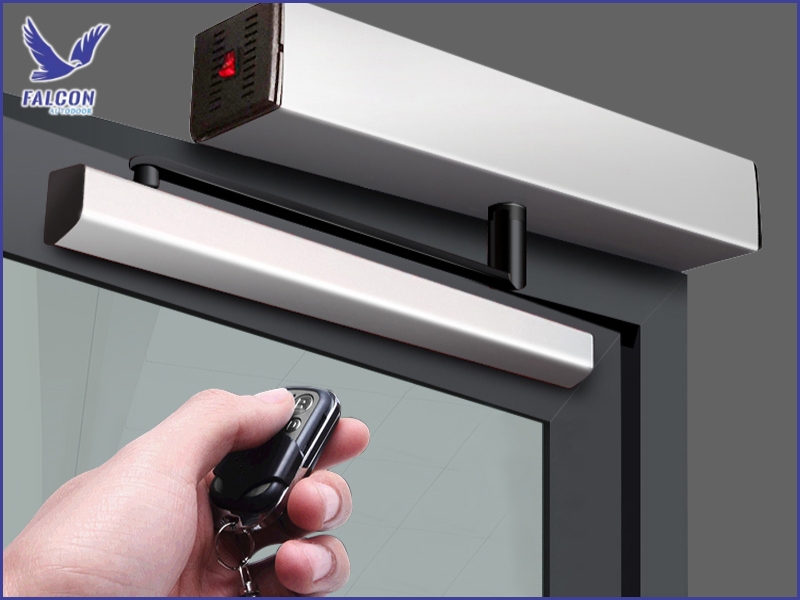
4. Calibration and operational testing after installation
Once installation is complete, calibration and operational testing are essential to ensure the automatic swing door functions correctly. This stage allows fine-tuning of key parameters, early detection of technical issues, and confirmation that the system is ready for use.
4.1 Setting safety parameters and opening force
Opening and closing force should be adjusted to ensure smooth yet firm movement. Safety parameters must be configured so the door stops or reverses immediately upon detecting obstacles, reducing collision risks.
4.2 Testing sensor response and operating modes
Sensors should be thoroughly tested to ensure accurate detection of people and obstacles in various scenarios. Operating modes such as full automatic opening, partial opening, or locking mode must also be checked to confirm compliance with design requirements.
4.3 Trial operation under real usage conditions
The automatic swing door should be tested repeatedly under real usage conditions to evaluate stability and smoothness. This testing helps identify potential issues and allows necessary adjustments before final acceptance.
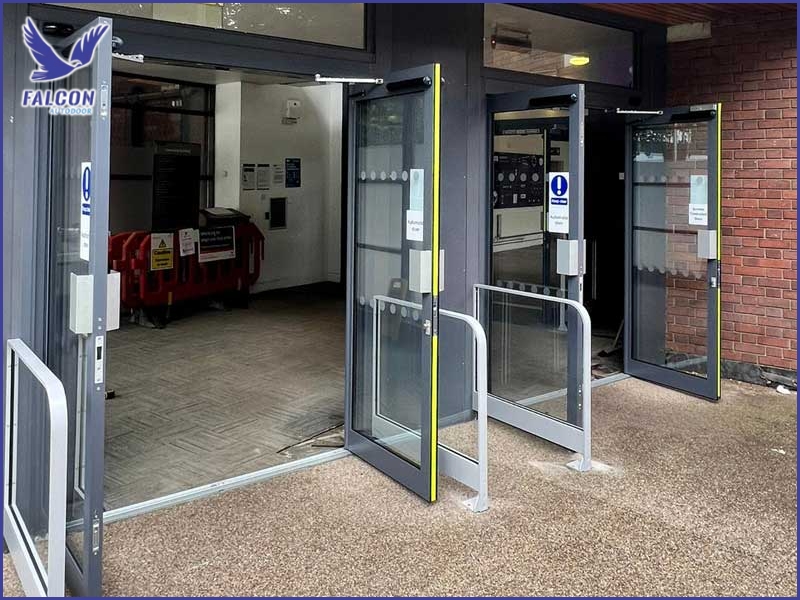
5. Acceptance procedures and technical considerations before use
After installation and calibration, proper acceptance procedures ensure the automatic swing door meets all technical requirements before being put into service. This stage confirms installation quality and minimizes long-term operational risks.
5.1 Acceptance criteria for compliant automatic swing doors
A door is considered compliant when it operates smoothly, opens and closes along the correct path, produces no abnormal noise, and responds accurately to sensors. Technical parameters such as opening force, speed, and swing angle should be verified and documented during acceptance.
5.2 Common technical issues after installation
Potential issues after commissioning include uneven opening and closing, motor overload, or delayed sensor response. Early identification of these issues allows timely adjustment and helps protect system lifespan.
5.3 Recommendations for inspection and maintenance after commissioning
To ensure long-term stable operation, a regular inspection and maintenance plan should be established after acceptance. Ongoing monitoring and proper maintenance help minimize failures while maintaining safety and performance.
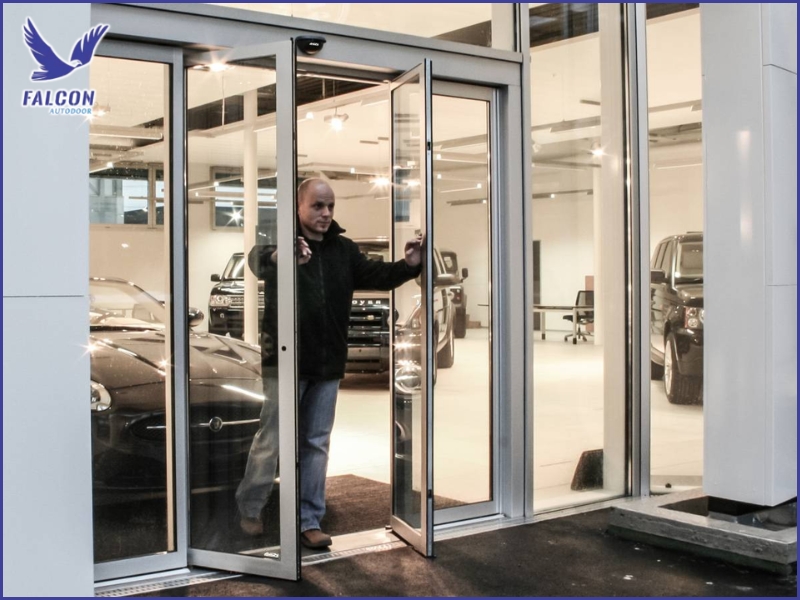
Installing automatic swing doors according to proper technical standards is essential to safety, durability, and overall system performance. When every step from assessment and installation to calibration and acceptance is carried out correctly, the door system operates reliably and meets real-world usage demands.
To achieve optimal installation results and reduce technical risks, choosing an experienced service provider with a clear installation process is crucial. Thuy Linh Long is ready to provide professional consultation and deliver automatic swing door solutions that ensure safe, stable, and long-lasting operation for your project.
THUY LINH LONG SERVICES TRADING COMPANY LIMITED
DISTRIBUTOR
Address: 243D Vuon Lai Street, Phu Tho Hoa Ward, Tan Phu District,
Ho Chi Minh City, Vietnam.
Tel: +84 28 22497999
E-mail: cuatudong24h@gmail.com
SUPPLIER
KUM YANG MATERIALS CO.,LTD
Address: 124-60, Myeongdong-ro, Hallim-myeon,
Gimhae-si, Gyeongsangnam-do, 50851, Korea.
Tel: 82-55-345-8380


